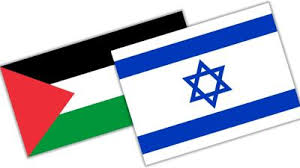
Terra Nullius means “Land belonging to no-one” in Latin
Most of us in the West still believe that the Jews were always in Palestine, from biblical times, and thus had a right to reclaim their birthright if and when they chose.
After the first Jewish rebellion against Roman rule in the year 66 CE, the Jews were mainly expelled from Judea, which was the part of Palestine where most of the biblical story had occurred.
Judea was a Roman province, ruled by a Jewish king, but under the overall control of the Roman Empire. Before the uprisings they had been a sizeable population, with a vibrant religious and cultural presence, and a long history.
Rome reacted brutally to the rebellion, which began in 66, but was crushed mercilessly by 74 CE. Rome destroyed most of the towns and villages throughout Judea, and enslaved those who remained alive.
Over 100,000 Jewish slaves were then forcibly dispersed around the Empire. The Roman Army had destroyed the Second Temple in Jerusalem, which was a symbol of Jewish nationhood. They had besieged Masada, where nearly all of the defenders took their own lives, as a symbolic act, and to avoid the Roman punishments that awaited them.
Many survivors moved permanently out of Judea, and settled in areas around the Mediterranean. They joined the already established Jewish diaspora, which was scattered throughout the Roman Empire, but concentrated mainly in Egypt, North Africa and Greece.
In 115 CE the Diaspora Revolt broke out, throughout the Roman provinces. Many Jewish communities from the Eastern provinces joined in. The rebels were fierce fighters, but the rebellion was easily put down by superior Roman power. Rome had brought in troops from around the Empire. Jews were permanently banned from some Roman provinces.
It is clear from the history of the region that dominion over Palestine changed hands many times over the next thousand years. There was a Muslim wave in the 7th century, the Crusaders in the 11th and 12 centuries, the Mamluks, the Ottoman Empire from 1516 to 1918, the British Mandate, officially from 1923 till 1947.
The population of Jews never recovered within Judea, or Palestine as it was now called. By the late 19th century Palestine was overwhelmingly populated by Muslims. They represented about 86% of the population, with about 9% Christian Arabs, and the Jewish population was estimated to be between 5 – 8%.
It was very much a province of the Ottoman Empire, now known as Turkeye. It had been ruled by them since 1516. It was poor, badly governed, and a Turkish backwater, but it had persevered for 400 years. It had prospered, in a modest way.
The rise of Zionism
From the end of the nineteenth century a group of fabulously wealthy, mainly European Jews began searching for a Jewish homeland, and a place for the revitalization and cultivation of the Hebrew language. They coined the phrase Zionism in 1896. it was a mainly political movement, rather than religious.
After a couple of false starts, they settled on Palestine as desirable. The Ottomans still governed until 1917, when the British, assisted by Allied armies, conquered the territory. It remained under Allied control, with British administration until the British Mandate was activated in 1923. Coincidentally, Britain was not authorised to administer the territory until 1923, so the British during those intervening years were technically illegally in charge. They allowed substantial Jewish immigration, against the will of the Arabs, both Muslim and Christian.
The Zionist movement believed that the Jewish claim to ownership of the land outweighed the claim of the Palestinians, whose homeland it undoubtedly was. The Zionists championed mass migration to Palestine, and with the financial support of families such as the Rothschilds, and a strong political campaign in Britain, it managed to suppress public recognition of the Palestinians’ claim to the territory. It also began to surreptitiously purchase land, mainly from absent landowners.
The eventual takeover of Palestine by the Zionists followed a pattern. Most of the larger European nations had spied territories in Africa and Asia that they felt could be exploited successfully. The Zionists followed suit.
Colonial settler societies, like America, Australia and Israel, ignored the reality of indigenous communities when they conquered their lands. Australia did so in 1788, America from the arrival of the Pilgrim Fathers, and Israel from the moment the Zionists decided they wanted Palestine.
It is as if the lust for land blinds them to the reality, there in front of their eyes. Real people, living on land they cultivate, to feed themselves. Their arguments reflect immense cultural and religious arrogance, as they decide that whatever they see, is of no real importance, because it does not fit with their belief that they (the colonialists) will ‘use’ the land in a more productive way. They use the idea that they are ‘enriching’ the indigenous culture by bringing white European ideas of progress and civilisation.
Somehow there is always a hint of religious superiority interwoven into the fabric of contempt for the preceding cultures.
The settler societies were not shy about stating their case for the taking of land. Early Zionists rationalised their right to displace the Arabs, with the slogan, “A land without people for the people without a land.”
At the time the Palestinians were approximately 90% of the population. It is crystal clear that the land in question was already populated and was hardly “empty.”
In 1969, Israeli Prime Minister Golda Meir said, “It was not as though there was a Palestinian people in Palestine considering itself as a Palestinian people and we came and threw them out and took their country away from them. They did not exist”. She said those words out loud, and on the record.
It is correct to say that Palestinians were previously ruled by the Ottoman Empire. They had been ruled by the Ottomans for 400 years, and their society was mainly made up of small farmers, with wheat the main crop.
So the popular belief that the Israelis merely asserted their ancient right to Palestine is built on very shaky ground. It appears that the Palestinians, the inhabitants of Palestine throughout the time of the Jewish diaspora, have suffered ever since the Zionists, with British connivance, stole their land. They have lived in refugee camps, or in occupied territories, ever since. They have no rights, and no hope. And the Israeli government is now engaging in their plan to create a Greater Israel. At the cost of all the countries in the Middle East.



 Ask Bucko
Leave a comment